Things to Do in Fes: The Complete Travel Guide (2026)
Marrakech gets the photographs. Fes gets the loyalty.
Ask anyone who has spent real time in both cities which one they would send a friend back to, and Fes wins more often than you would expect. It is not as polished, and it does not try to be. Fes el-Bali, the old walled city founded in the 9th century, is still a working medina. Leather is still tanned by hand in the same pits used for a thousand years, and the university at its center has been teaching students since before Oxford existed. Walking into it does not feel like visiting a preserved old town. It feels like stepping into a city that never stopped being itself.
That is the case for things to do in Fes, Morocco: this is where you go to see a city function, not perform. Consider this Fes travel guide your starting point for figuring out exactly where to spend your time. If you’re continuing south, our Fes to Marrakech desert tour takes you from the medina to the Sahara and on to Marrakech.
Why Visit Fes?
Is Fes worth visiting? Yes. Fes is Morocco’s cultural and spiritual capital, home to the oldest continuously operating university in the world and the largest car-free urban zone anywhere on earth. It’s one of the best cities to visit in Morocco, and it rewards travelers who want to see Moroccan history and craftsmanship as they actually exist, not as a curated version of themselves.
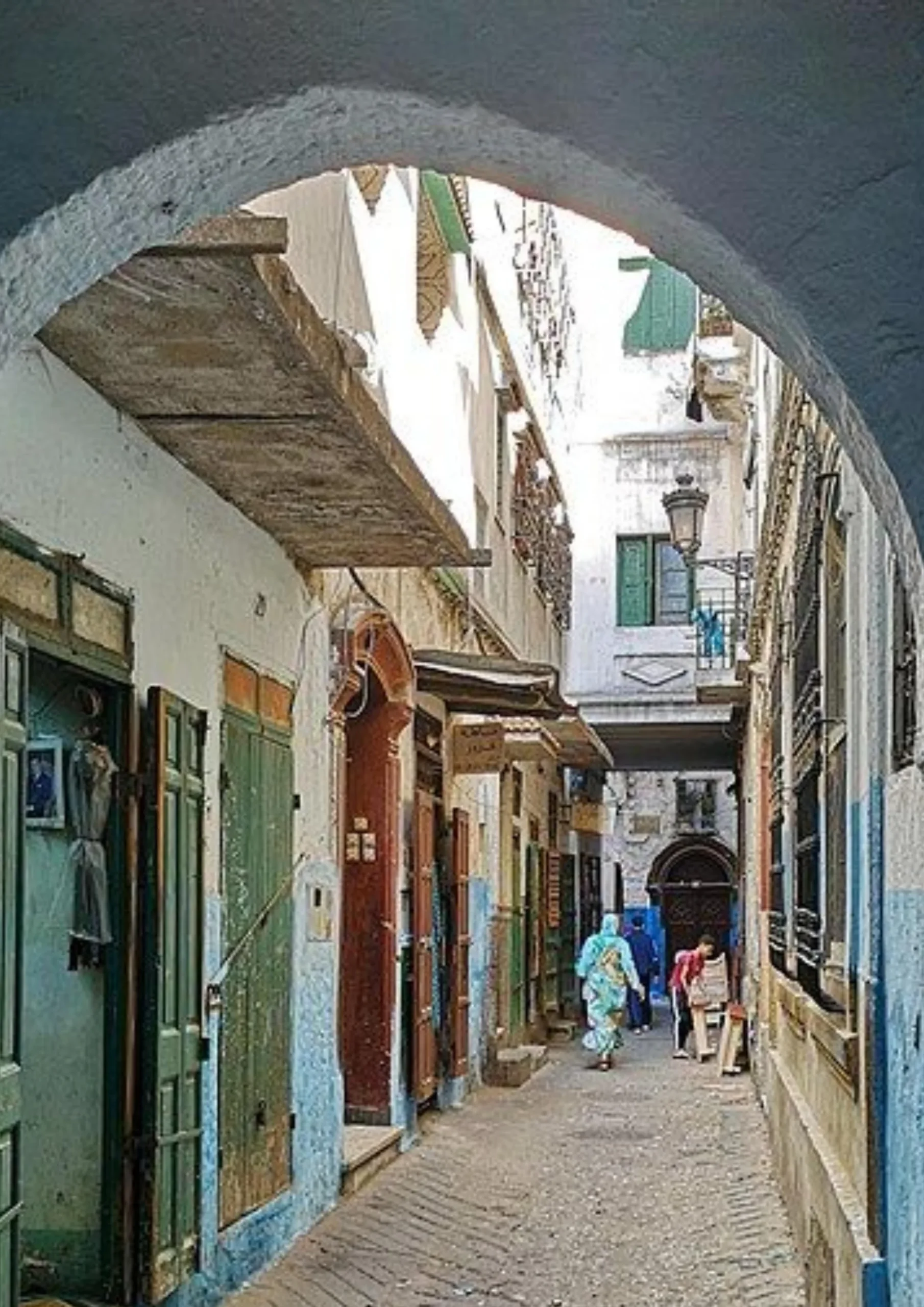
Fes was founded in 789 CE and served as Morocco’s capital under multiple dynasties. What makes it different from Marrakech is not age alone; Marrakech has plenty of history too. It is density. Fes el-Bali packs roughly 9,000 alleyways into a walled area you can cross on foot in under an hour, and almost none of those alleyways were built with tourism in mind. Donkeys still haul cargo through streets too narrow for handcarts. Craft guilds still occupy the same neighborhoods they have held for centuries: the tanners by the river, the metalworkers near their own gate, the dyers close to the water source they need.
This is a city best suited to travelers who like to get a little lost, who want their history experienced firsthand rather than described. It is less immediately comfortable than Marrakech. It is also, for a lot of visitors, more memorable. Families with older children who enjoy exploration do well here. So do first-time visitors willing to hire a guide for their first day. Independent travelers who prize authenticity over convenience tend to rank Fes as their favorite stop in the country.
Quick Facts
| Location | Northern Morocco, roughly 3.5 hours by road from Marrakech, 1 hour from Meknes |
| Nearest Airport | Fes–Saïss Airport (FEZ), about 20 minutes from the medina |
| Best Season | March–May and September–November |
| Recommended Stay | 2–3 nights minimum |
| Currency | Moroccan Dirham (MAD) |
| Language | Arabic and Amazigh (official); French widely spoken; English common in tourist areas |
| Time Needed | Full day minimum for the medina, 2 days to see it properly |
| Walking Difficulty | Moderate to difficult — steep alleys, uneven stone, no vehicle access |
| Family Friendly | Yes, for older children; strollers are impractical in the medina |
| Luxury Level | Ranges from budget guesthouses to five-star riads |
Top Things to Do in Fes
The Fes attractions below are not ranked by popularity so much as by how they fit together on foot, since the medina rewards a logical route more than a checklist.
Bab Bou Jeloud (The Blue Gate)
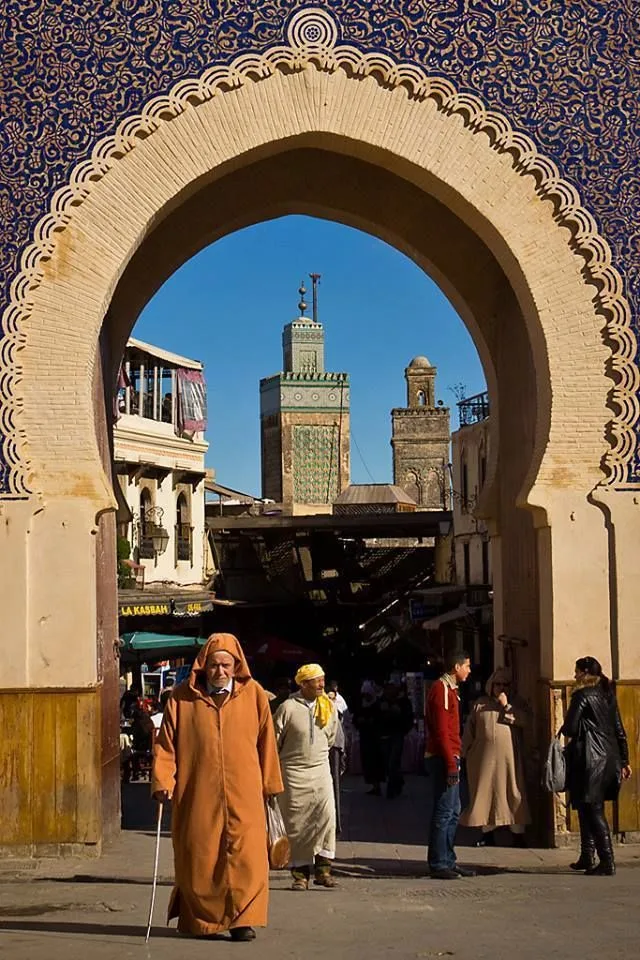
What is the entrance to the Fes Medina called? Bab Bou Jeloud, known as the Blue Gate, is the main pedestrian entrance to Fes el-Bali and the traditional starting point for any visit.
The gate itself is worth slowing down for. Its outer face is tiled in the deep blue associated with Fes, while the inner face facing the medina is green, the color of Islam. Walk through it once from each direction and you will notice the color shift, a small detail most first-time visitors miss because they are already distracted by what is on the other side: the minarets of the Bou Inania Madrasa rising just beyond.
Al-Qarawiyyin Mosque and University
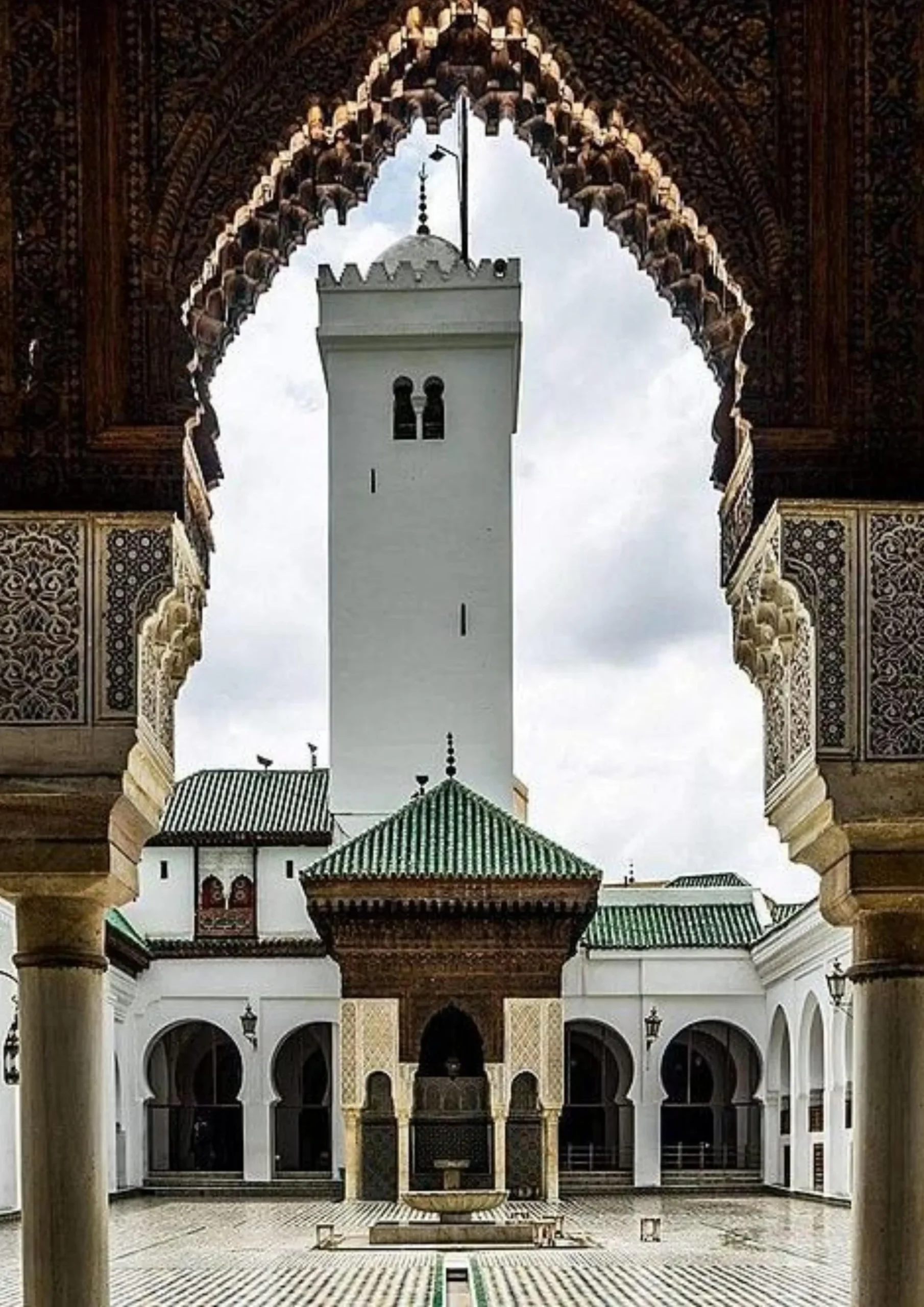
What is the oldest university in the world? Al-Qarawiyyin, founded in Fes in 859 CE by Fatima al-Fihri, is recognized by UNESCO and Guinness World Records as the oldest continuously operating institution of higher learning on earth.
Non-Muslim visitors cannot enter the mosque itself, but the university’s library reopened to limited public visits after a widely covered restoration, and several courtyard views are accessible from the surrounding streets. Even from outside, the scale of it is worth appreciating: this was training scholars in mathematics, astronomy, and theology while much of Europe had no equivalent institution at all.
Bou Inania Madrasa
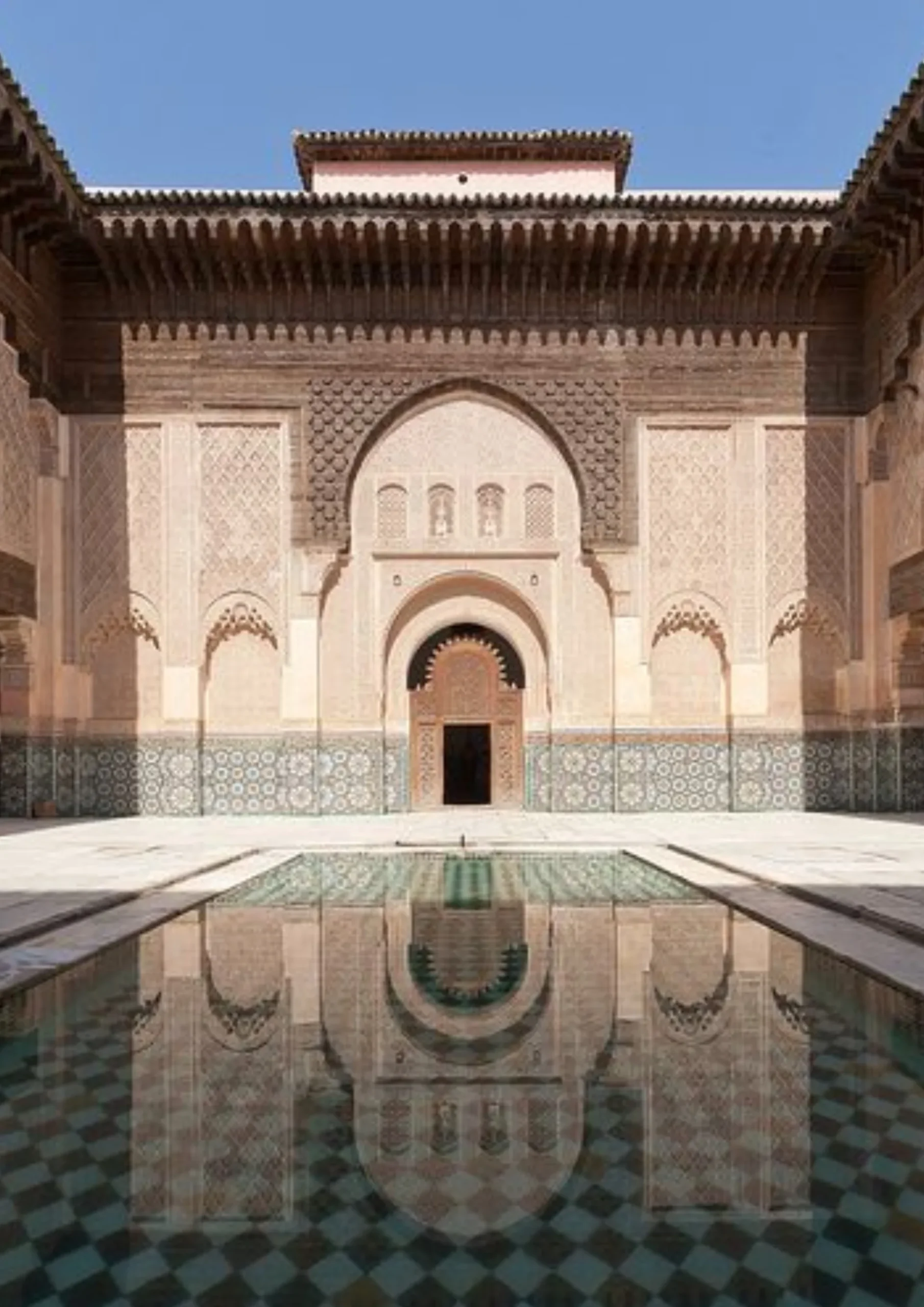
This is the one madrasa in Fes that non-Muslims can fully enter, and it earns the exception. Built in the 14th century, it is considered the finest surviving example of Marinid architecture in the country: carved cedar, hand-cut zellige tilework, and a central courtyard designed to cool the building using nothing but airflow and a reflecting pool.
What makes Bou Inania different from a lot of restored monuments is that it still functions. It has an operating mosque section, unusual for a madrasa open to non-Muslim visitors, and the call to prayer occasionally interrupts a tour in a way that feels less like a photo opportunity and more like a reminder of what the building is actually for.
Chouara Tannery
Why is the Fes tannery famous? The Chouara Tannery is one of the oldest working tanneries in the world, using the same stone vats and natural dyeing process, pigeon droppings and quicklime to soften hides, then plant-based dyes for color, that leatherworkers here have used since the medieval period.
This is the single most photographed sight in Fes, and also the one most likely to disappoint visitors who arrive without context. From the surrounding terraces, you will see dozens of round stone vats in ochre, red, and yellow, with workers moving between them in what looks almost choreographed. It is genuinely striking. It is also, up close, a working industrial site with a strong smell that catches most first-timers off guard.
Al Attarine Madrasa
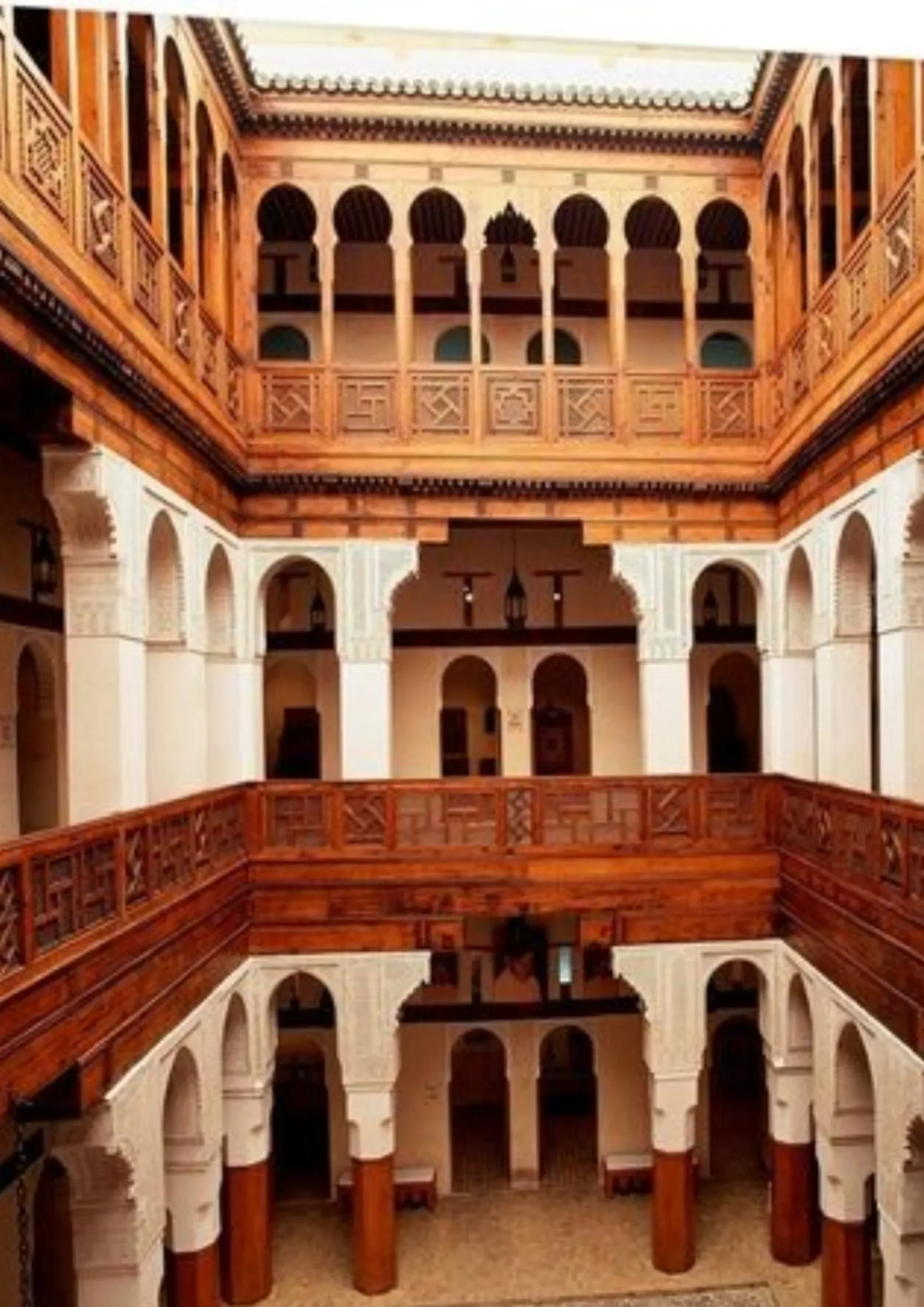
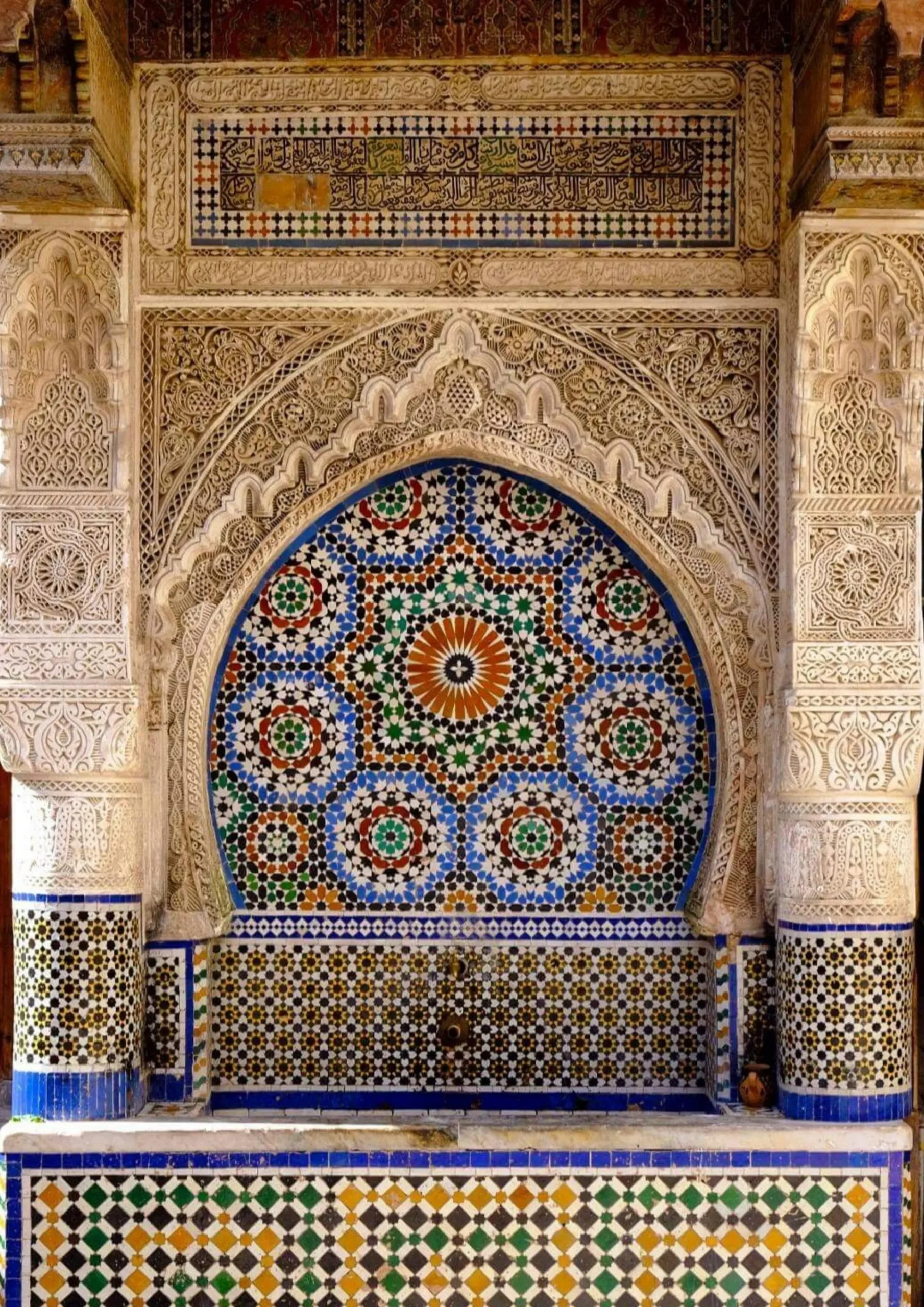
Smaller and quieter than Bou Inania, and for exactly that reason, some travelers prefer it. Built in the early 14th century near the old spice and perfume market it is named for, its courtyard tilework is considered some of the most technically precise zellige work in the medina: thousands of individually cut tile pieces assembled into geometric patterns with no repeated seams visible to the eye.
Dar al-Makhzen (Royal Palace Gates)
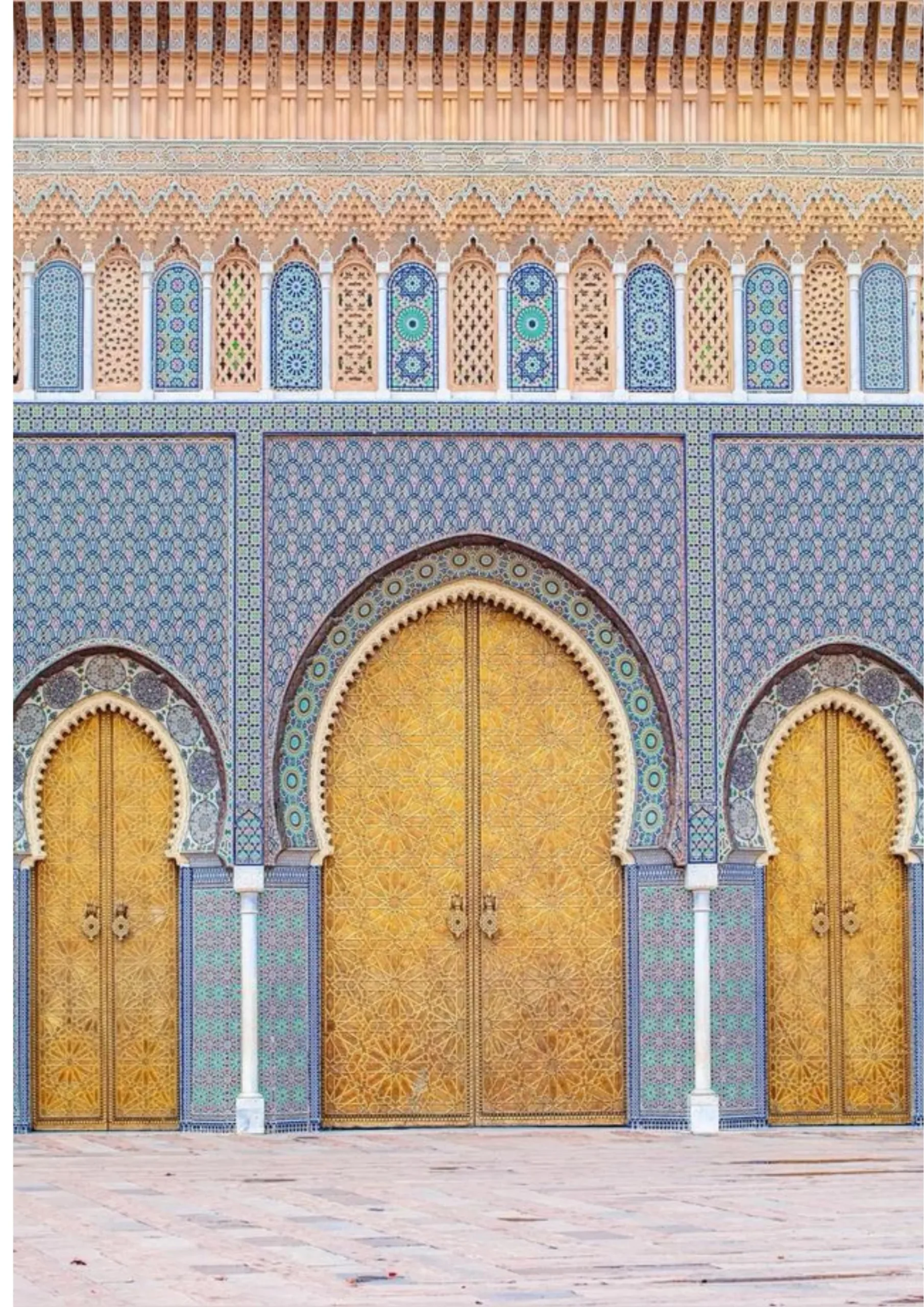
You cannot enter the Royal Palace itself, but you are not really meant to. The point is the seven brass-doored gates facing the plaza outside, each one hand-hammered and inlaid with intricate geometric brasswork. They are arguably more photogenic than most interiors in the city, and they cost nothing to see.
Nejjarine Fountain and Museum of Wooden Arts
A restored 18th-century caravanserai, a merchant inn built around a central courtyard, that now houses a small museum dedicated to Moroccan woodworking. The building itself is the real draw: three stories of carved wooden balconies wrapped around an open courtyard, with the elaborately tiled Nejjarine Fountain just outside its entrance.
Borj Nord and the Marinid Tombs
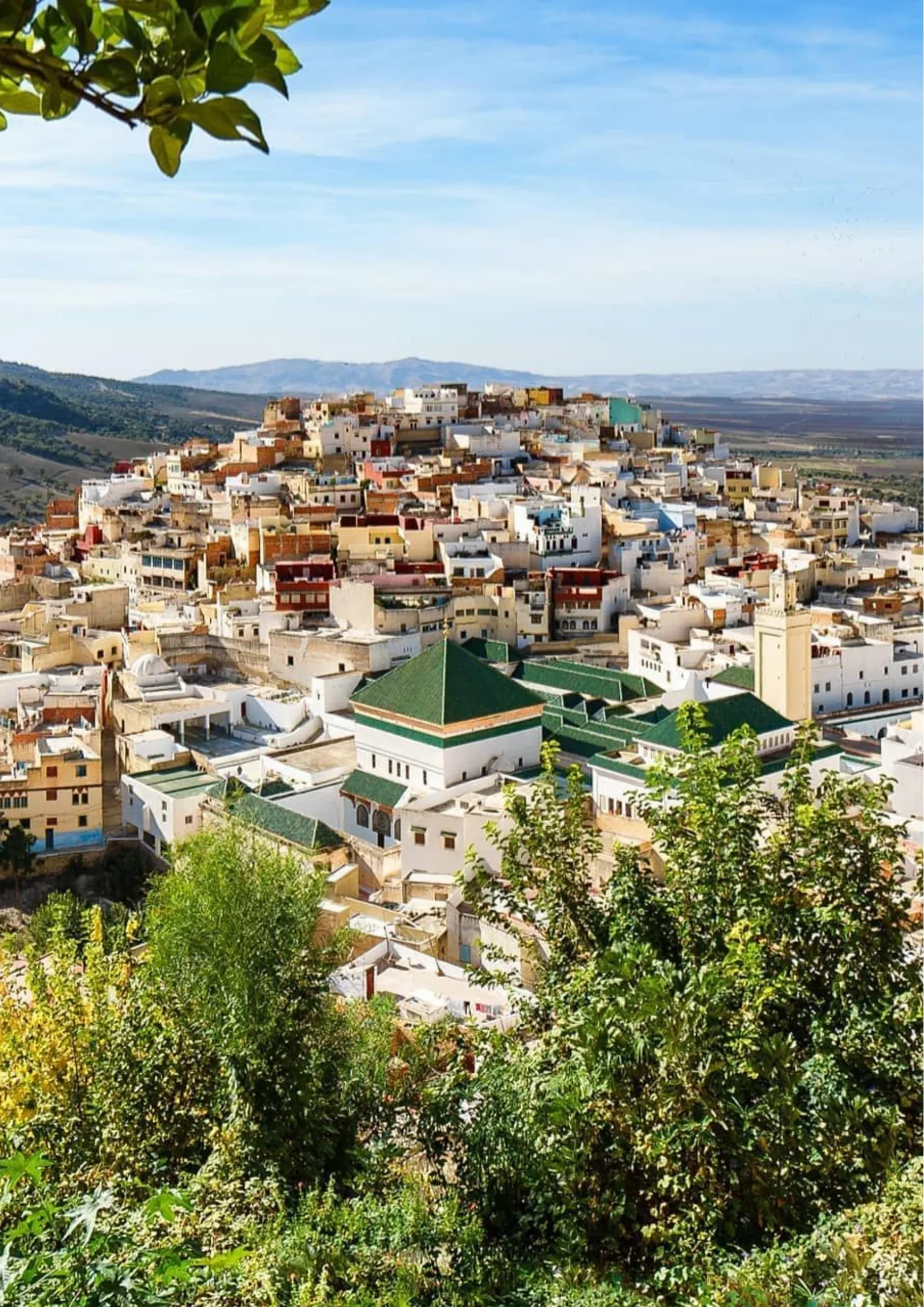
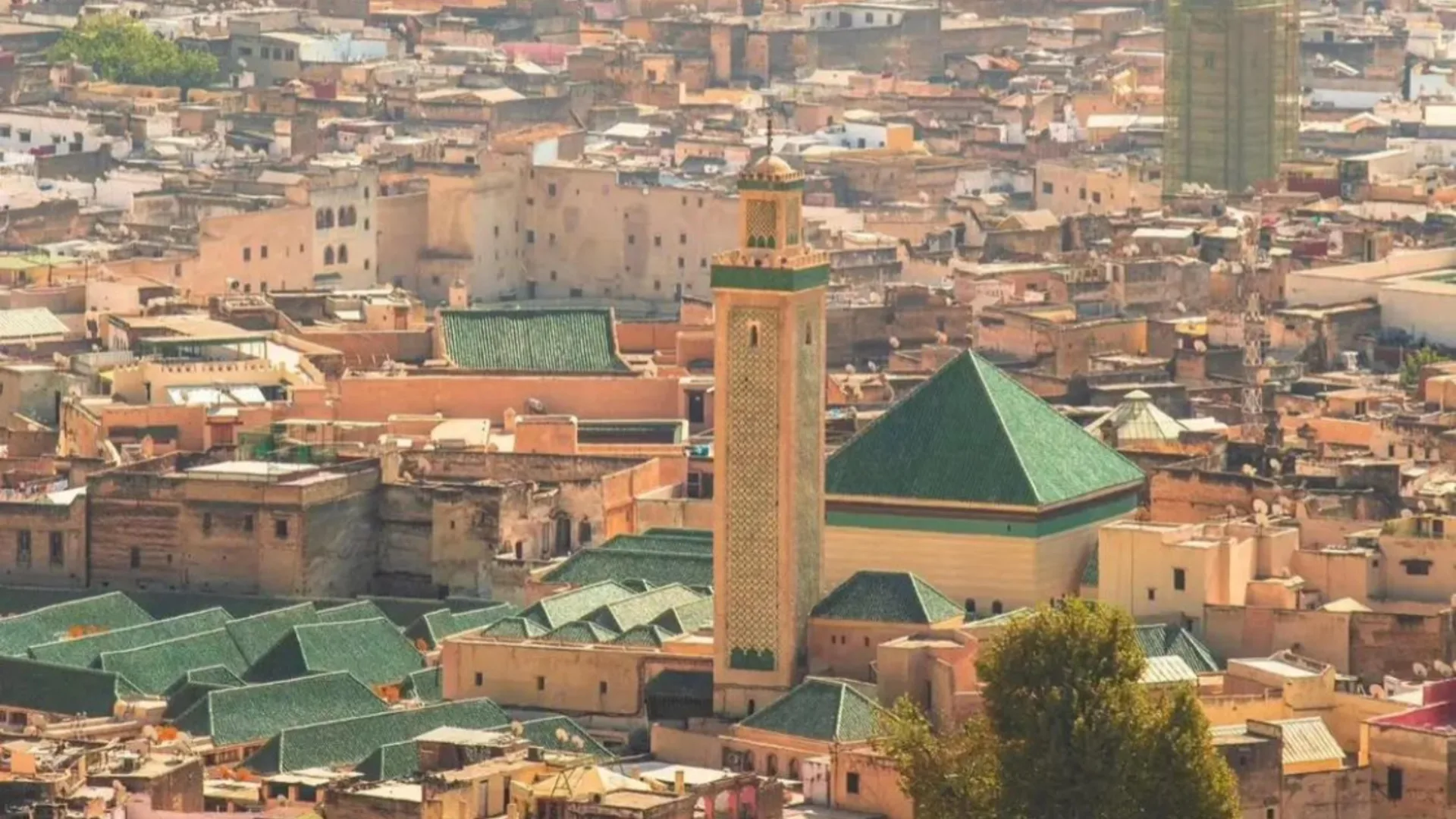
For the single best panoramic view of Fes, walk or take a short taxi ride up to the hills north of the medina, where the ruined Marinid Tombs and the Borj Nord fortress overlook the entire old city. This is where you actually understand the scale of what you have been walking through: a dense, tan-colored sprawl broken only by minarets and the green-tiled roofs of the major monuments.
Hidden Experiences
Beyond the landmarks, the more memorable things to do in Fes tend to be quieter. A handful of experiences stay with visitors longer than the monuments themselves.
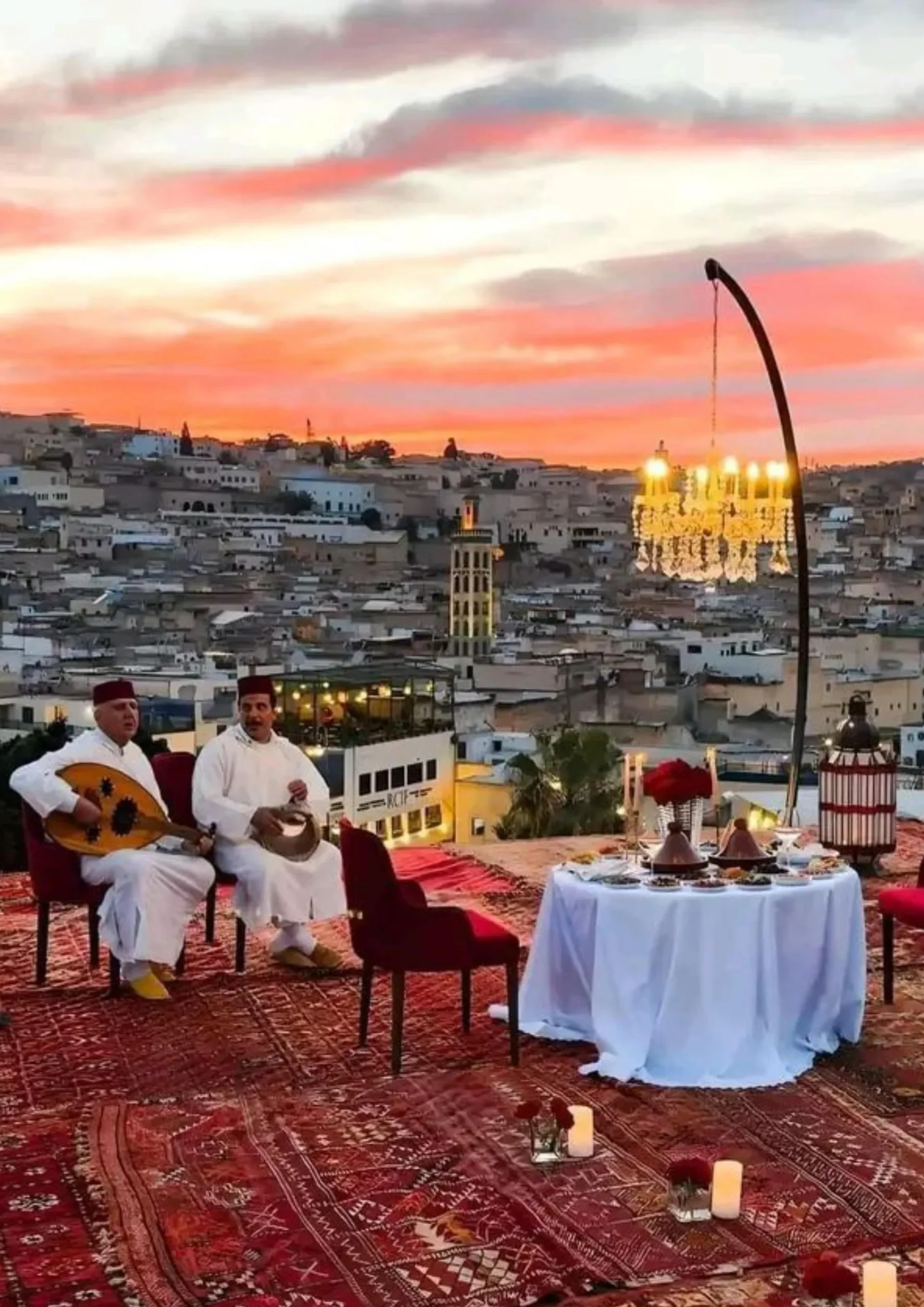
A private rooftop dinner. Several riads and independent hosts in Fes arrange rooftop dinners with live Andalusian or Gnawa music, set against the medina skyline at dusk. It is the kind of evening that photographs beautifully, but the real value is in the quiet: after a day of navigating crowded alleys, having a terrace to yourself with the call to prayer echoing across the rooftops is a genuinely different register of the city.
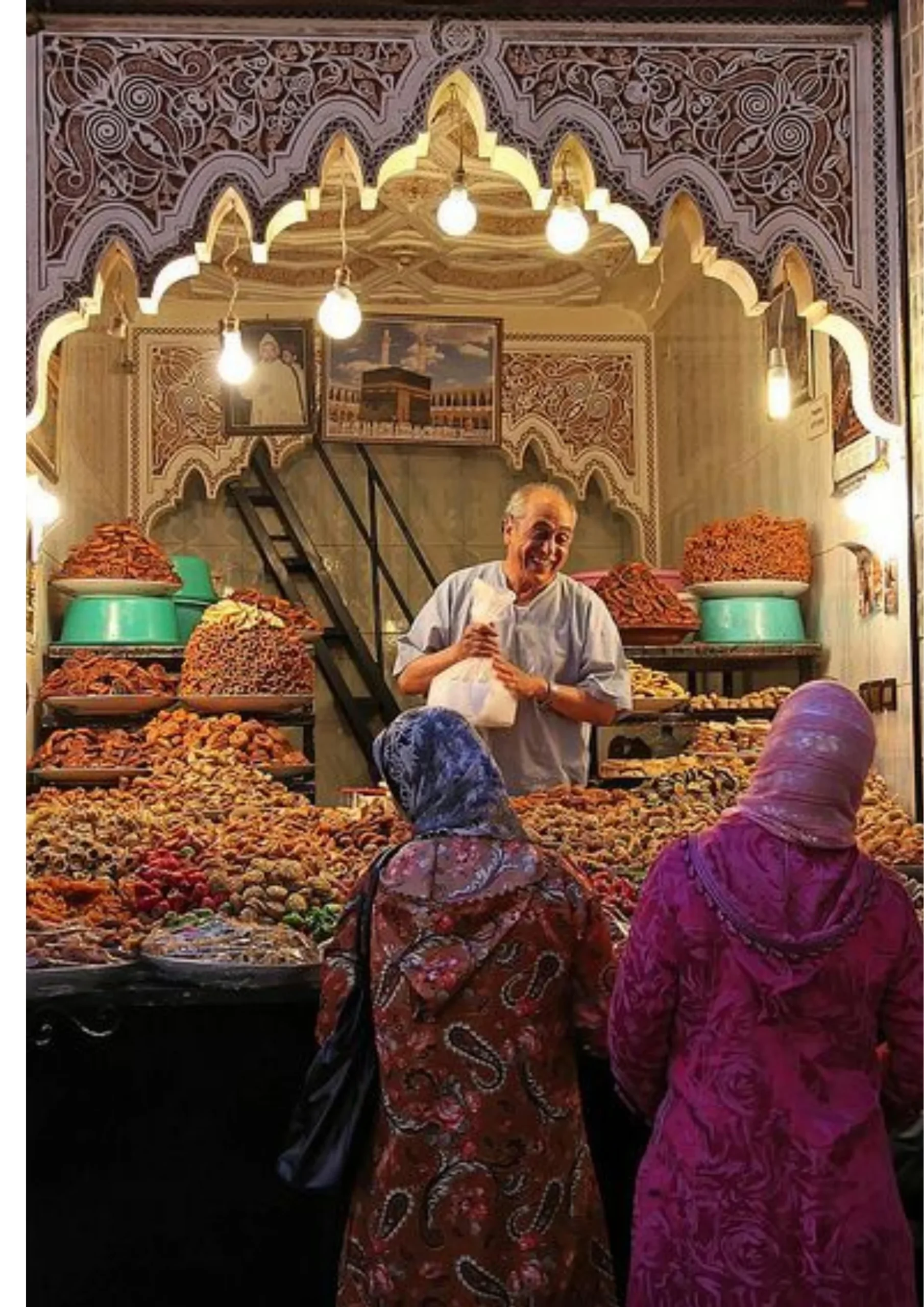
A visit to a working spice shop. Fes’s spice merchants are not just selling saffron and ras el hanout for tourists; most Fassi households still buy their spices this way. A good merchant will let you smell and taste before buying, and many will explain what each blend is traditionally used for rather than just pushing a sale.
An artisan workshop visit. Beyond the tannery, the medina has working potters, brass engravers, and weavers who will let you watch, and sometimes try, their craft. These visits are rarely on a standard tour itinerary and usually require a guide who knows which workshops welcome visitors.
A traditional hammam. A public or riad hammam, a Moroccan steam bath and scrub treatment, is a genuine local ritual, not a spa gimmick imported for tourists. Riad hammams are more private and tourist-comfortable; public hammams are cheaper and more authentic, though they take some social confidence to navigate as a first-timer.
Local Food
What food is Fes known for? Fes is considered the birthplace of refined Moroccan cuisine, and its signature dish is pastilla, a sweet-and-savory pastry traditionally filled with pigeon (chicken is now more common), layered with almonds, cinnamon, and sugar under a crisp pastry shell.
What to eat in Fes:
- Pastilla — the city’s signature dish, worth seeking out at a proper restaurant rather than a street stall
- Fes-style tagine with preserved lemon and olives — a regional variation, more delicate than versions common in Marrakech
- Harira — a hearty tomato and lentil soup, especially good in cooler months
- Khobz — fresh flatbread, sold throughout the medina
- Sfenj — Morocco’s answer to the doughnut, best bought hot in the morning
Where to eat ranges from rooftop restaurants overlooking the medina, ideal for a special dinner, to small family-run spots tucked into side streets that serve some of the best home-style cooking in the city. Dining etiquette in Fes leans traditional: meals are often eaten with the right hand from a shared central dish in more casual settings, bread is used to scoop rather than cutlery, and lingering over tea after a meal is expected, not rushed.
Shopping Guide
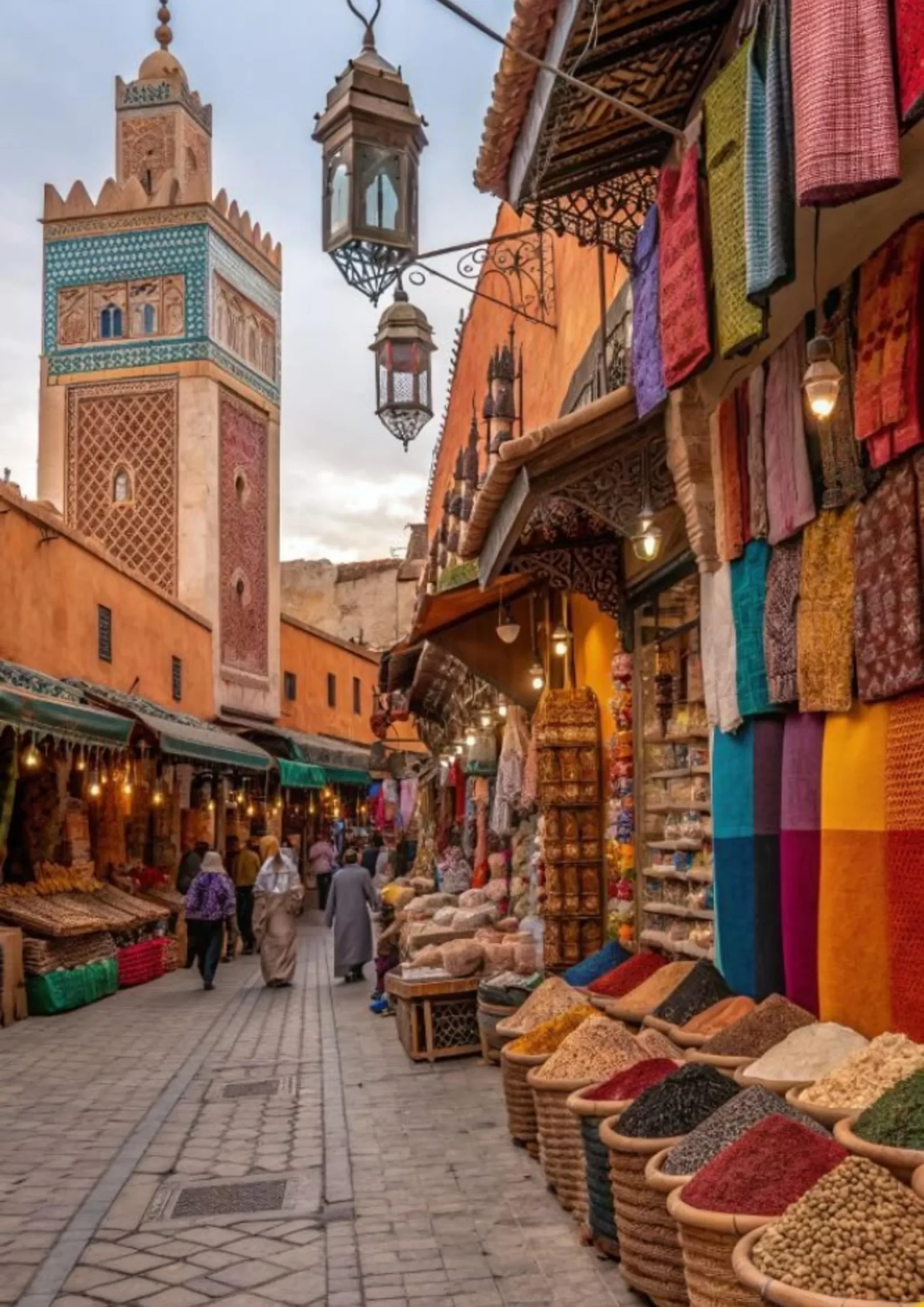
Fes is widely considered Morocco’s best city for traditional crafts, and the difference between here and Marrakech’s souks is specialization: each guild in Fes has occupied the same part of the medina for generations, so you are generally buying from the source rather than a reseller.
What to buy:
- Leather goods, direct from workshops near the Chouara Tannery
- Zellige tile and pottery, particularly blue-and-white Fes pottery
- Brass and metalwork, especially engraved trays and lanterns
- Woven textiles and carpets from smaller souks off the main thoroughfares
Scams to avoid:
- Unsolicited “guides” near Bab Bou Jeloud offering a free tour that ends at a commission-paying shop
- Fixed “government price” claims for carpets, which do not reflect how pricing actually works
- Pressure to buy immediately after a mint tea offer; walking away is always acceptable
Bargaining is expected almost everywhere except fixed-price cooperatives. A reasonable target is 40–60% of the initial asking price, though this varies by item and shop.
Suggested Itinerary
However long you have, a good Fes itinerary respects the medina’s layout rather than fighting it.
- Half Day: Enter through Bab Bou Jeloud, walk to Bou Inania Madrasa, then continue toward the tannery terraces before exiting through the souks near Talaa Kebira.
- One Day: Add Al-Qarawiyyin’s exterior, the Nejjarine Fountain and Museum, and Al Attarine Madrasa, finishing at Borj Nord for sunset over the medina.
- Two Days: Split the medina across two mornings to avoid fatigue, and dedicate an afternoon to the Mellah and the Royal Palace gates, plus a spice shop and artisan workshop visit.
- Three Days: Use the extra day for a day trip to Meknes and the Roman ruins at Volubilis, returning to Fes in the evening for a rooftop dinner.
Day Trips from Fes
Fes makes an efficient base for exploring the surrounding region. Meknes, another of Morocco’s imperial cities, sits roughly an hour away and offers a quieter, less crowded counterpart to Fes’s own medina. Just beyond Meknes, the Roman ruins at Volubilis are among the best-preserved in North Africa, with mosaic floors still visible in situ. Ifrane, sometimes called Morocco’s “Little Switzerland” for its alpine architecture, makes a striking contrast less than an hour into the Middle Atlas.
Further afield, Chefchaouen’s blue-washed medina is a popular add-on for travelers heading north, while Fes also functions as a starting point for multi-day routes toward the Sahara. If you would rather not manage these logistics independently, Morocco Time Travel arranges private day trips and multi-city itineraries departing from Fes, tailored around exactly how much ground you want to cover. Arriving from Marrakech instead? Our 4-day desert tour from Marrakech to Fes covers the Sahara en route, ending right here in the medina.
Where to Stay
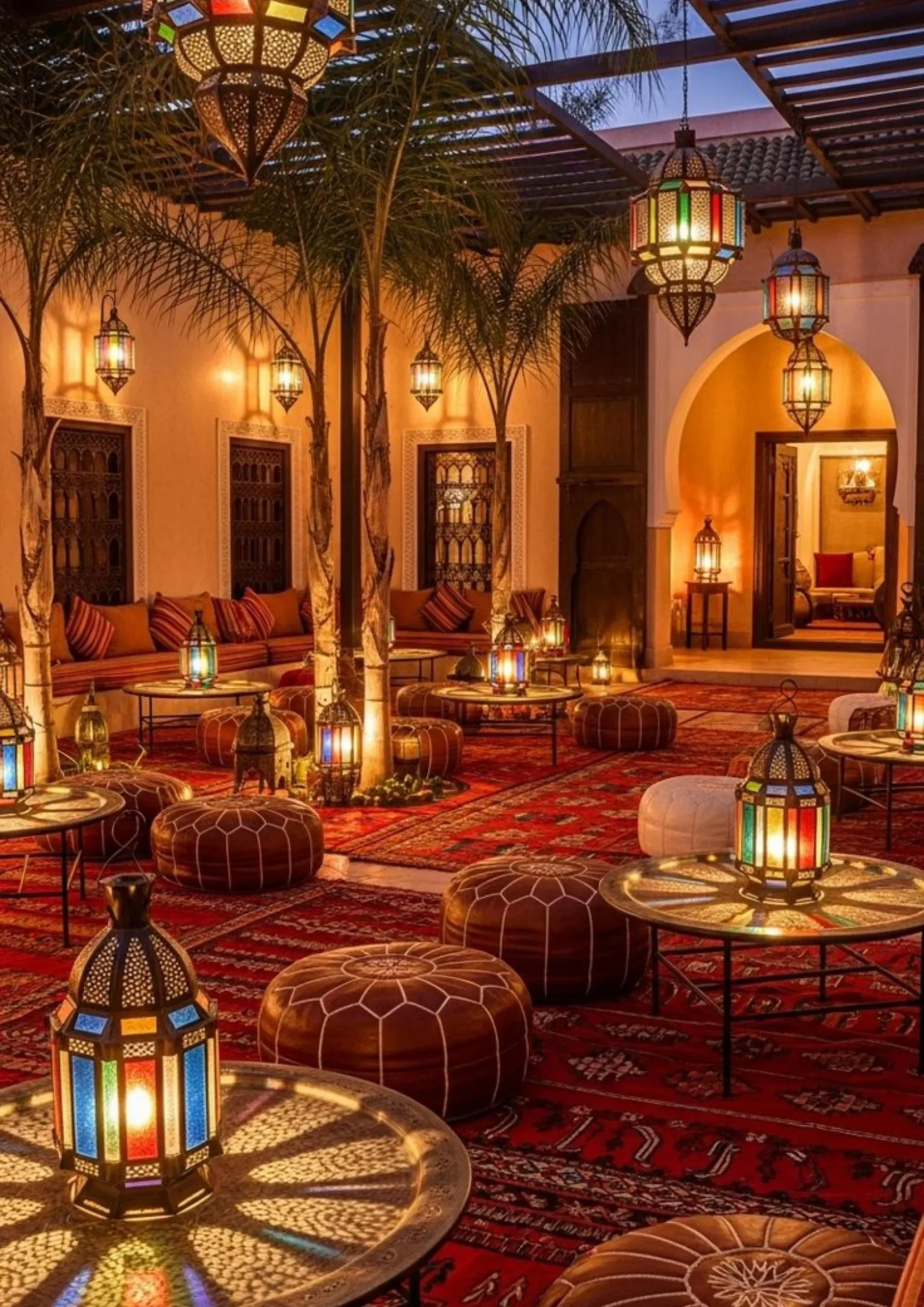
Luxury: Restored riads inside or just outside the medina walls offer the most atmospheric high-end stays, typically with rooftop terraces, traditional courtyards, and personal service that larger hotels cannot replicate.
Mid-range: Guesthouses in the medina or the nearby Ville Nouvelle (new town) offer solid comfort without luxury pricing, often with easier vehicle access.
Budget: Simple guesthouses and hostels exist both inside the medina and in the new town; medina options put you closer to the sights but require walking the last stretch.
The medina itself is the best area for atmosphere and walkability to major sights. The Ville Nouvelle suits travelers who want modern conveniences, easier transport access, and a wider range of restaurants nearby.
Transportation
Walking is the only way to move through most of Fes el-Bali; the medina is entirely pedestrian, with some sections navigable only on foot due to width and stairs.
Taxis (petit taxis, colored red in Fes) are inexpensive for short trips between the medina gates and the new town, though negotiate or confirm the meter is running before you set off.
Trains connect Fes efficiently to Casablanca, Rabat, Tangier, and Marrakech via Morocco’s ONCF rail network, making it a practical stop on a multi-city route.
Buses, particularly CTM, cover routes the train does not, including Chefchaouen and smaller towns.
A private driver is the most comfortable option for day trips to Meknes, Volubilis, or onward travel, and removes the need to navigate unfamiliar routes independently.
Best Time to Visit
When is the best time to visit Fes? Spring (March to May) and autumn (September to November) offer the most comfortable temperatures for walking the medina, typically in the 65–80°F (18–27°C) range.
Summer in Fes runs hotter and drier than the coast, often exceeding 95°F (35°C) by midday, which makes the medina’s narrow, shaded alleys more bearable than open squares but still demanding. Winter is mild during the day but genuinely cold at night, and the medina’s stone construction holds the chill. Crowds peak in spring and around major Islamic holidays; the quietest months for photography and unhurried exploring tend to be late autumn and early winter, once the summer heat has broken.
Travel Tips
Money: Dirhams are needed for most medina purchases; larger riads and restaurants often accept cards, but small shops and street food generally do not.
Dress: Modest clothing, shoulders and knees covered, is respectful and practical in the medina, regardless of religion or gender.
Safety: Fes is generally safe for travelers, including solo travelers, though the medina’s maze-like layout means getting lost is common; download an offline map or hire a guide for your first day.
Internet: Wifi is widely available in riads and cafés; a local SIM card is inexpensive and worth getting at the airport if you need reliable data throughout your trip.
Language: Arabic and French cover most situations; English is common in tourist-facing businesses but less reliable off the main routes.
Cultural etiquette: Ask before photographing people directly, especially shopkeepers and artisans at work; a purchase or a polite request usually resolves this without awkwardness.
Things to Do in Fes: Frequently Asked Questions
What is Fes best known for?
Fes is best known for its walled medina, Fes el-Bali, the largest car-free urban area in the world, and for Al-Qarawiyyin, the oldest continuously operating university on earth.
How many days do you need in Fes?
Two full days covers the medina’s major sights properly; three days allows time for a day trip to Meknes or Volubilis.
Is Fes safe for tourists?
Yes, Fes is generally safe for tourists, including solo travelers, though the medina’s dense layout makes it easy to get lost, which is a navigation issue rather than a safety one.
Is Fes or Marrakech better to visit?
Neither is strictly better; Marrakech suits travelers who want energy and nightlife, while Fes suits those prioritizing craftsmanship, history, and a less tourism-shaped medina.
Do I need a guide in Fes?
A guide is not required but is strongly recommended for your first day, given the medina’s roughly 9,000 alleyways and lack of reliable phone signal in some sections.
What should I wear in Fes?
Modest clothing covering shoulders and knees, along with comfortable closed-toe shoes suited to uneven stone streets and stairs.
Can you drink tap water in Fes?
Bottled or filtered water is recommended for visitors, even though tap water is treated; sudden changes in water supply are a common cause of minor stomach upset for travelers.
What is the smell at the Chouara Tannery?
The tanning process uses natural but strong-smelling agents, including pigeon droppings and quicklime; most visitors are offered fresh mint to hold while viewing the vats.
How do you get from Fes to Marrakech?
By train via Morocco’s ONCF network (roughly 7–8 hours direct), by CTM bus, or by private driver, which typically takes 5–6 hours depending on the route.
Is the Fes medina wheelchair accessible?
No, the medina’s uneven stone streets, stairs, and narrow passages make it very difficult to navigate for wheelchair users or anyone with significant mobility limitations.
What currency is used in Fes?
The Moroccan Dirham (MAD); it is a closed currency, meaning it cannot be obtained outside Morocco, so plan to exchange or withdraw after arrival.
Are there direct flights to Fes?
Fes–Saïss Airport receives direct flights from several European cities; travelers from the US, Canada, and Australia typically connect through Casablanca or a European hub.
What is the best area to stay in Fes?
The medina offers the most atmospheric stay with easy access to major sights; the Ville Nouvelle suits travelers who prioritize modern conveniences and easier transport.
Can you visit Al-Qarawiyyin as a non-Muslim?
Non-Muslim visitors cannot enter the mosque itself, but the university’s restored library has opened for limited public visits, and exterior views are accessible from the surrounding streets.
Is Fes worth visiting if I’ve already been to Marrakech?
Yes; Fes offers a genuinely different experience centered on craftsmanship, deeper history, and a medina that functions less around tourism, making it a strong complement rather than a repeat of Marrakech.
Ready to Experience the Best Things to Do in Fes?
Fes is easier to appreciate with someone who already knows which alley leads where, and which workshop is worth the detour. Morocco Time Travel builds private Fes itineraries around exactly how much time you have, whether that is a single guided day through the medina or a multi-city route connecting Fes with Marrakech, the Sahara, and beyond. If you are still deciding where else to go, our guide to the best cities to visit in Morocco is a good place to start.
Plan Your Fes Itinerary